
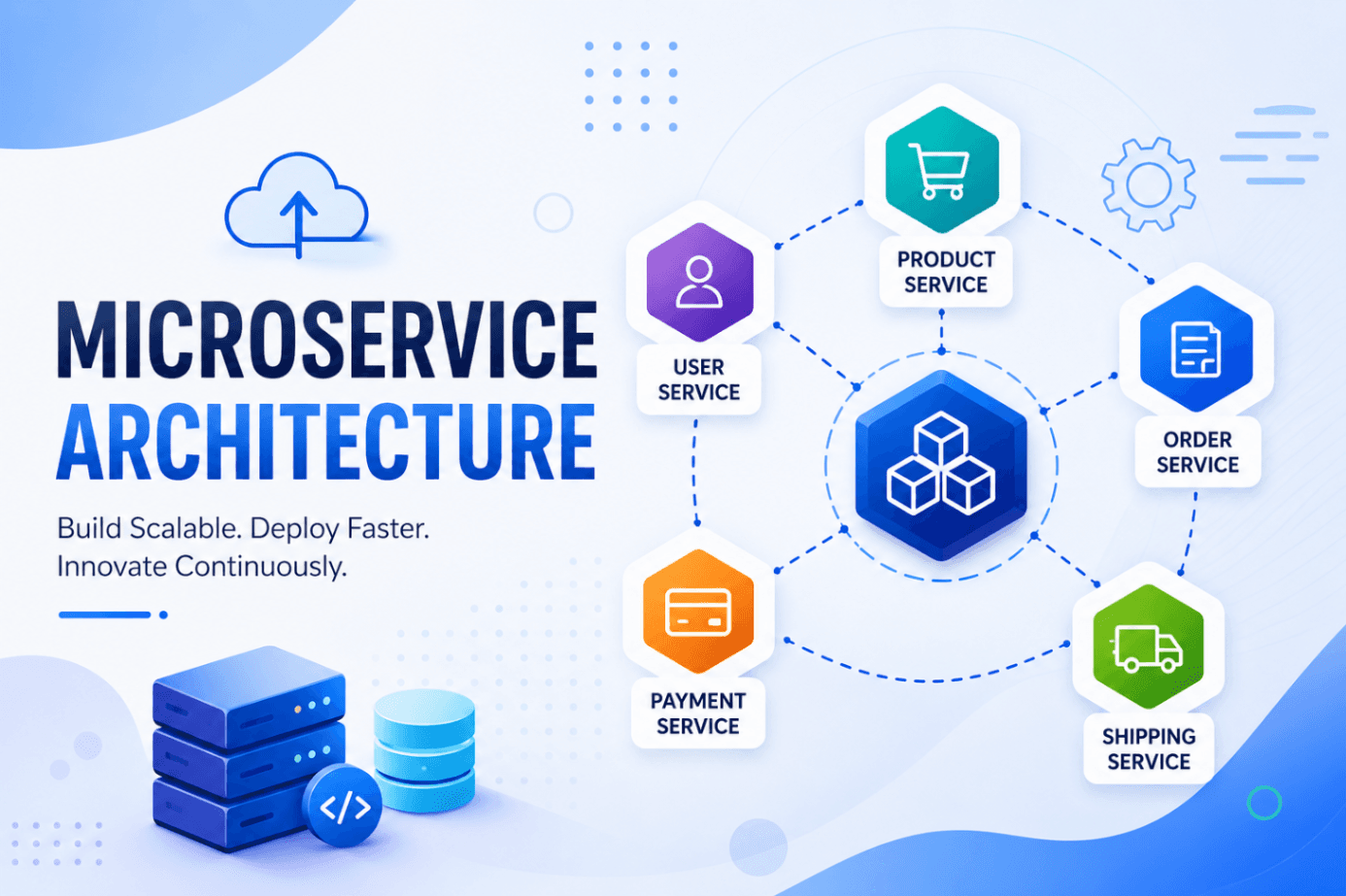
Microservices Architecture
Learn Microservices Architecture, including service decomposition, API gateways, containerization, scalability, fault tolerance, and best practices for building modern distributed applications using technologies like Docker, Kubernetes, Node.js, Java, Go, and cloud platforms.
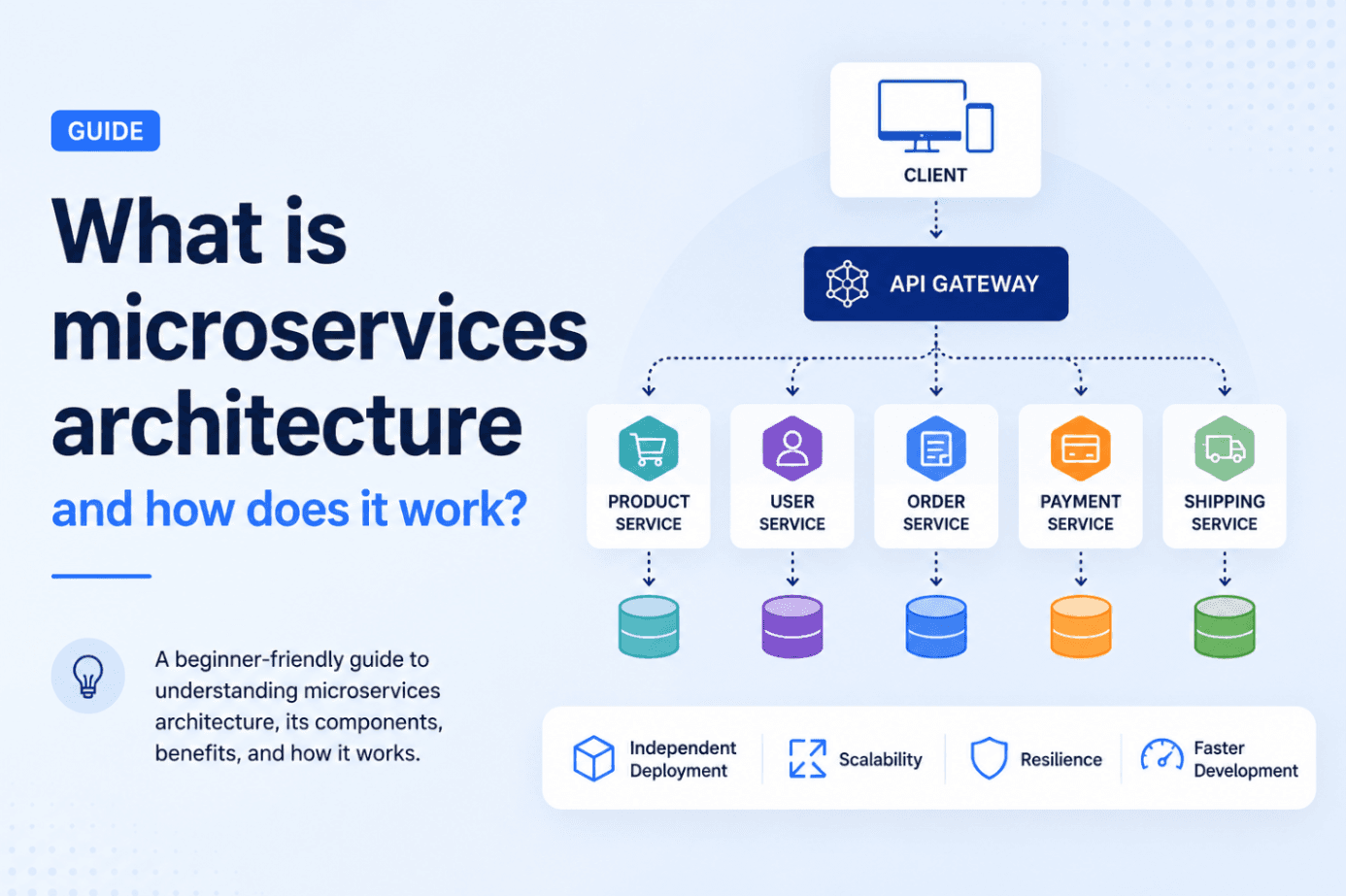
About Microservices Architecture
What is a Microservice?
At its core, a microservice is a single, self-contained piece of software that handles exactly one specific business function within a larger application.
Think of a traditional application as a monolith—a massive, single block of stone where everything (user authentication, payment processing, product catalog, and notifications) is fused together. If one part cracks, the whole block can shatter.
A microservice architecture breaks that single block into a collection of small, independent lego bricks. Each brick (microservice) runs its own mini-application, has its own logic, and manages its own data.
The Anatomy of a Single Microservice
For a service to truly be considered a microservice, it must possess three core characteristics:
Highly Specialized (Single Responsibility): It does one thing and does it exceptionally well. For example, a
Payment Serviceonly handles transactions; it doesn't care how products are added to a shopping cart.Autonomous & Independent: It can be developed, tested, and deployed to production without needing to change or restart any other service in the system.
Isolated Data (Database-per-Service): It owns its data. If the
User Serviceneeds information from theOrder Service, it cannot look inside the order database directly. It must ask theOrder Servicevia an API.
Real-World Example: An E-Commerce Application
To see the difference clearly, let's look at how an online store changes when moving from a monolithic structure to microservices.
Monolithic Approach: [ User Interface ] ──> [ One Massive Codebase ] ──> [ Shared Single Database ] (Auth + Cart + Inventory)
In a microservices setup, that single application is split into specialized workers that communicate over the network:
Identity Service: Manages user logins, passwords, and permissions.
Product Catalog Service: Holds product details, images, and search logic.
Order Service: Tracks shopping carts and processes checkout requests.
Notification Service: Sends emails or SMS updates when an order is placed.
How Do Microservices Talk to Each Other?
Because they are isolated, microservices must use lightweight communication channels to work together as a single cohesive system. They primarily use two methods:
Synchronous (Request/Response): A service asks for data and waits for an immediate answer. This is typically done using HTTP/REST or gRPC. For example, the
Order Servicecalls thePayment Serviceto charge a credit card before finalizing an order.Asynchronous (Event-Driven): A service broadcasts that something happened and moves on without waiting. This is done using a message broker like RabbitMQ or Apache Kafka. For example, when an order is completed, the
Order Servicepublishes anOrder_Placedevent. TheNotification Servicepicks up that event and triggers a confirmation email automatically.
When Should You Use Microservices?
Microservices offer incredible power, but they come with a "complexity tax" because managing multiple moving parts over a network is harder than managing one codebase.
Choose a Monolith if: You are a small team, building an MVP (Minimum Viable Product), or your application traffic is predictable and manageable.
Choose Microservices if: Your application is scaling rapidly, multiple development teams are stepping on each other's toes in the same codebase, or specific features require massive, independent computing power.